

Compromised vs. Best-in-Class: What Drives Prestige Property Values
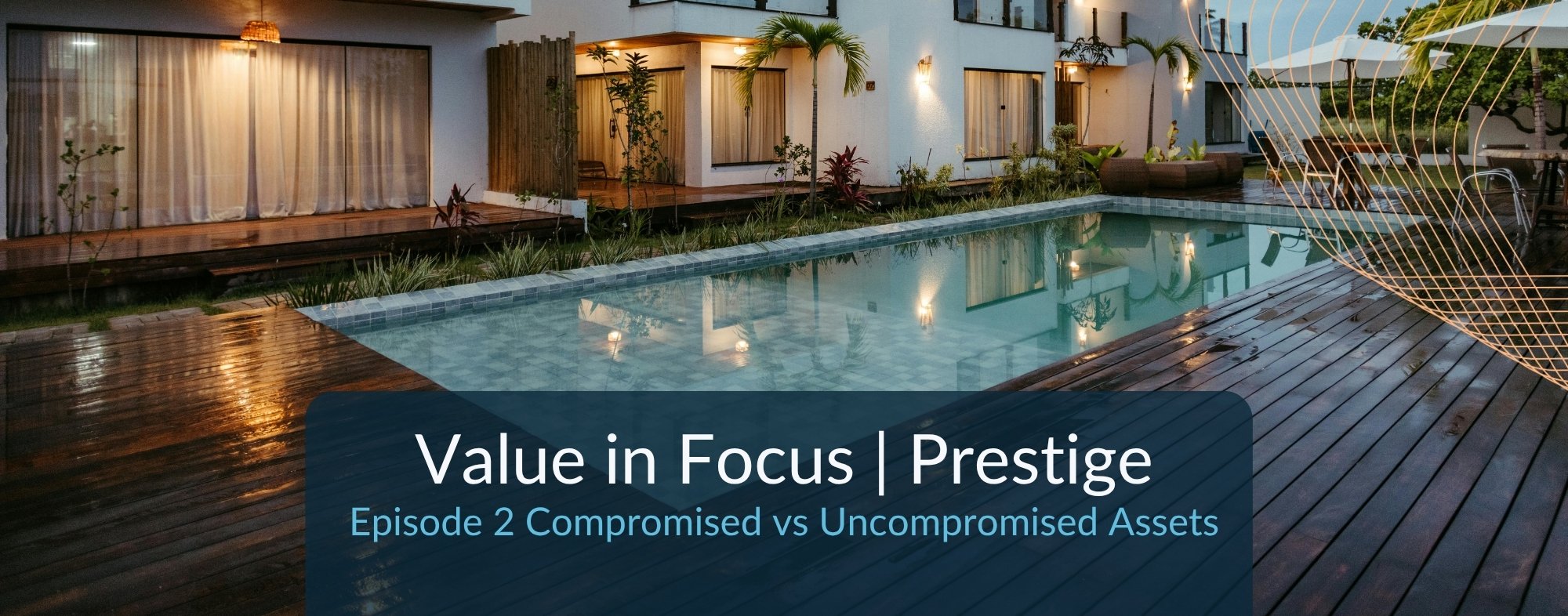
In this episode, George and Gabriel discuss the key factors influencing the value of prestige and waterfront properties, including what makes a property compromised versus best-in-class, and how market conditions affect demand.
At the top end of the property market, not every prestige home is created equal. In Episode 2 of the Opteon Prestige Property Insights Series, Gabriel Carreno, Opteon's Director for Residential Prestige NSW, joins George Garagounis, NSW ACT & VIC State Director, to unpack the growing divide between best-in-class assets and properties that fall short of buyer expectations and what that means for waterfront value in particular.
What makes a prestige property "compromised"?
According to Gabriel, a compromised property is one that lacks one or more of the distinct attributes buyers expect at the top end of the market. That might mean a home requiring renovation, restricted views, or a location that doesn't offer the same amenity as a blue-chip address.
Buyers at this level are applying greater scrutiny than ever. A rundown property in Vaucluse illustrates the point clearly: purchased for just under $25 million in November 2023, the same property has recently been relisted with local agents indicating value in the low $20 million range well below its previous sale price, despite sitting in one of Sydney's most sought-after suburbs.
A market that no longer forgives compromise
In a stronger market, some of these shortcomings can be absorbed by broader growth. In the current market, however, buyers have more choice and are far less willing to overlook compromises unless they're reflected in the price.
The gap between best-in-class and compromised assets is widening. Properties with realistic pricing and strong fundamentals continue to attract solid interest, while compromised properties face softer demand.
A comparison of two waterfront sales in Sydney's north makes the point well: a substantially improved property in a narrow inlet with restricted water views in Newport sold for $9.5 million, while a nearby property with open water views over Pittwater sold for $11 million, despite having more modest improvements. Value isn't just about the quality of the improvements; more often than not, it's the nature of the view that dominates.
What buyers want and what valuers weigh up
Odd internal layouts, limited functionality, and homes requiring significant renovation are being impacted most. Presentation matters at this price point, and it's common for prestige homes to be renovated every 7 to 10 years just to keep pace with buyer expectations.
Turnkey homes with open-plan living and unobstructed views are commanding the strongest interest, while unrenovated homes with restricted outlooks or inefficient floor plans are facing softer demand.
The factors that drive waterfront value
As a prestige valuer, Gabriel assesses waterfront property against a combination of factors, including:
- Tidal frontage
- Available views
- Access to the High Water Mark (HWM)
- Aspect and topography
Subtle variations in these attributes can drive significant price differences between properties that, on the surface, look similar.
When high-end waterfront sales are limited or infrequent, a broader approach to market analysis is required — placing more weight on a property's scarcity, location, and land attributes, and relying on more dated evidence in nearby locations after adjusting for key differences. Close relationships with local agents remain critical for staying abreast of current market activity.
Demand remains strongest for the irreplaceable
From a buyer's perspective, demand is strongest for properties with rare or irreplaceable attributes — deep-water frontage, level access to the HWM, and uninterrupted views. These are the attributes that underpin long-term value.
Overall, the waterfront market is holding up relatively well, though it remains highly selective. Buyers continue to compete for tightly held properties in prime locations. A recent case in point: a prime harbour property in Vaucluse sold for $57 million, marking the highest sale price for a house anywhere in Australia so far this year.
The takeaway for vendors
If you're sitting on a prestige property today, the message is clear: in a more selective market, quality and presentation carry more weight than ever. Compromises that might once have been absorbed by growth are now showing up directly in price.
Watch the full conversation between Gabriel Carreno and George Garagounis in Episode 2 of the Opteon Prestige Property Insights Series. In Episode 3, we sit down with one of Sydney's most prominent real estate agents to get his take on the state of the prestige market.
New episodes every two weeks
The Opteon Prestige Property Insights Series releases a new episode every two weeks. Subscribe below to receive each one directly in your inbox as it drops.
About the Authors
Gabriel Carreno is Director – Residential Prestige NSW at Opteon, specialising in high-value residential valuations across Sydney and key prestige markets nationally.
George Garagounis is State Director – NSW/VIC/ACT at Opteon, with broad oversight of residential and prestige valuation services across the eastern seaboard.
Enjoying the series? Subscribe to get each episode in your inbox →
Episode 2 | Compromised vs. Uncompromised

.jpg?width=800&name=OTP%20AUS%20November%202023%20Sydney%20Prestige%20Market%20Blog%20Header%20V2%20(1).jpg)


.jpg?width=800&name=Web_Resi-2-1030x735%20(1).jpg)