


Across Australia’s capital cities and key regional centres, one of the most consistent and measurable drivers of residential prestige is not waterfront position, significant views, architectural merit, or proximity to a CBD, but school catchment boundaries.
Analysis confirms that families are paying significant premiums for homes inside sought-after public school catchment zones in Sydney and Melbourne. In Brisbane, the St Lucia and Indooroopilly western suburbs corridor commands premiums approaching 10% above comparable out-of-zone stock. In Adelaide, properties within the Glenunga International High School and Marryatville High zones carry similar premiums. In Perth, suburbs falling within the Shenton College and Churchlands Senior High School catchments have consistently outperformed adjacent areas, with several of those suburbs crossing the $2 million median threshold for the first time in the 2024-25 financial year.
The relationship between educational reputation and residential value is well established in Australian property markets. What is less well understood is how that relationship forms over time; how certain suburbs transition from ordinary residential precincts to genuine prestige markets, driven in no small part by the concentration of educational aspiration that quality schools generate.
This article explores that process at a national level, drawing on both data and on-the-ground valuer insight to examine what education-driven prestige looks like across different cities, what it means for buyers and owners, and what valuation practitioners need to understand when assessing these markets.
According to Gabriel Carreno, Director – Residential Prestige at Opteon, education-driven prestige is one of the most durable property value drivers seen across all markets.
“Unlike lifestyle or amenity premiums, which can shift with taste or demographics, proximity to a high-performing school tends to compound over time as the reputation of the institution grows."
Market Conditions and the Education Premium: What the Data Tells Us
2025 Cotality research compared property values inside popular public high school catchments with comparable homes in the same suburbs but outside the zone boundary. Across nine catchment clusters in Sydney and Melbourne, seven recorded higher median house values than their out-of-catchment counterparts.
The most striking premium was on Sydney's North Shore, where houses within the combined catchments of Killara High School, Willoughby Girls High School, and Lindfield Learning Village held a median value approximately $1.3 million, or 39.8%, above houses just outside the boundary. In Melbourne, houses in the Princes Hill Secondary College and University High School catchments commanded a premium of approximately $357,000.
The Real Estate Institute of Victoria (REIV) has reported that median house prices can be up to $425,000 higher inside a popular school zone than for a neighbouring home outside the catchment boundary, with some estimates extending further in the most competitive zones.
These figures are significant. They also carry an important nuance: the presence of a premium does not, by itself, guarantee superior capital growth. In six of the nine catchment clusters, properties inside the zone recorded lower long-term growth over 15 years than their out-of-catchment neighbours. The premium was already priced in.
This distinction matters profoundly for valuation practitioners, buyers, and advisers.
How Education Reputation Creates Prestige Suburbs Over Time: The Formation Sequence
Prestige does not emerge overnight. In education-driven markets, the typical sequence follows a recognisable pattern.
A school achieves strong academic results, consistent over several years, and begins to develop a community reputation. Families with the financial capacity to choose their location begin to prioritise the catchment boundary when purchasing. Demand concentrates. Entry prices rise. The demographic profile of the suburb shifts toward higher-income households, which in turn attracts investment in local retail, hospitality, and community infrastructure. Within a decade or two, a suburb that was simply a comfortable middle-ring residential area has developed the characteristics of a genuine prestige market.
Sydney's North Shore belt provides the clearest national example. Suburbs such as Killara, Lindfield, and Willoughby built their prestige profiles over generations, with school access functioning as both cause and effect of the demographic change. Melbourne's education corridor, encompassing areas including Balwyn North, Glen Waverley, and the McKinnon zone, followed a similar path, accelerated in the 2000s and 2010s as demand from families seeking alternatives to private school fees intensified.
The Private School Fee Equation
The cost of private secondary education in Australia provides important context. The Futurity Investment Group Cost of Education Research (2026) found that parents in Sydney will need to find $401,512 over 13 years for independent schooling for a child starting school in 2026, with leading Sydney private schools charging upwards of $45,000 annually for Year 12 tuition alone. In Melbourne, Geelong Grammar Year 12 families are charged almost $50,000. For families with two or more children, the cumulative cost of independent schooling can readily exceed $800,000 over a generation.
Set against this backdrop, a catchment premium of $300,000 to $500,000 in purchase price can represent a rational long-term financial decision, particularly when the premium is carried on a mortgage that diminishes in real terms over time while school fee obligations do not.
This dynamic has been a meaningful driver of demand in established public school catchment zones over the past 15 years and shows no sign of reversing.
Says Carreno: "We consistently see buyers willing to pay well above what the bricks and mortar would justify in isolation. The school is effectively being capitalised into the land value, and that premium is often durable across market cycles."
City-by-City: Education-Driven Prestige Markets Nationally
Sydney: North Shore and the Inner West
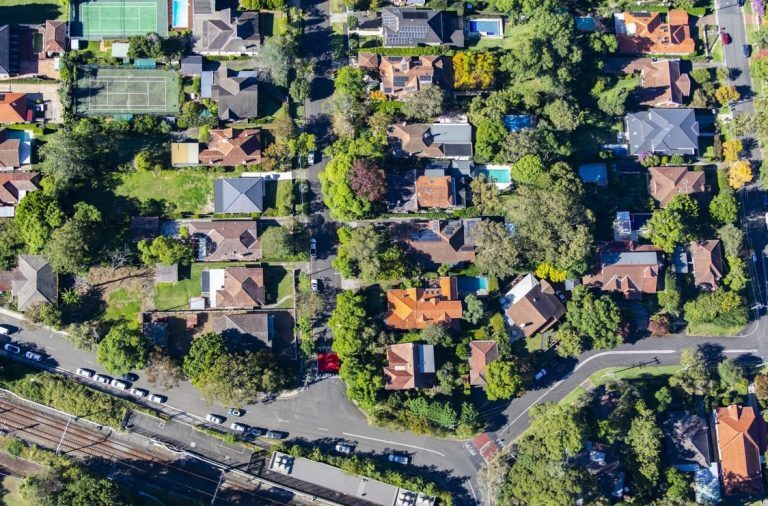 Image source: realcommercial.com.au
Sydney's most established education-premium precincts remain concentrated on the North Shore and parts of the inner city and eastern suburbs. The Killara, Lindfield, and Willoughby corridor is the national benchmark for school-zone premium concentration. Sydney Girls High School and Sydney Boys High School, both academically selective, anchor significant residential demand across adjacent suburbs.
Cotality-sourced data confirms the strength of this corridor's premium. Killara's typical house price sits at approximately $4,135,000, while units in the suburb hold a median of $1,084,000 - a gap that itself reflects the depth of demand for detached family homes in this catchment. Lindfield's median house price stands at approximately $4 million, up 5.8% over the past year, while Willoughby's median house price is approximately $3.8 million, up 3.6% annually.
| Suburb | Property Type | 12-month Median Sales Price | Annual Change |
|
Killara |
House |
$4,135,000 |
4.6% |
| Killara | Unit | $1,084,000 | -13.2% |
|
Lindfield |
House |
$4,162,500 |
5.8% |
|
Willoughby |
House |
$3,880,000 |
3.6% |
Source: Cotality Market Trends (July 2026).
-1.jpeg?width=900&height=600&name=image%20(1)-1.jpeg) Image source: realestate.com.au
Image source: realestate.com.au
Melbourne's education-premium geography is more distributed than Sydney's, but no less pronounced. The Balwyn High School catchment in Boroondara continues to command premiums of 8 to 10% above surrounding areas. Glen Waverley Secondary College in the City of Monash draws families from across the south-east, with the 2025 REIV research confirming premiums of up to half a million dollars in the most competitive zones.
McKinnon Secondary College in the south-eastern suburbs represents a compelling case study in the formation of education-driven prestige. Over the past decade, the McKinnon zone has seen consistent median value growth and rapid transaction velocity as families compete for a limited pool of in-catchment properties.
Recent Cotality Home Value Index suburb-level median value data reinforces the strength of Melbourne's education-led housing markets. As at July 2026, Balwyn North recorded a median house value of $2.33 million, reflecting the enduring appeal of the Balwyn High School catchment. McKinnon followed at $1.86 million, while Glen Waverley reached $1.76 million, underscoring the sustained demand associated with three of Melbourne's most sought-after public school zones.
The data highlights how access to highly regarded government schools continues to be capitalised into residential property values, with family buyers willing to pay significant premiums for entry into tightly held catchments.
Melbourne families are being locked out of the city’s top public school zones, with affordable houses having vanished from every top-ranked secondary catchment. Escalating house prices mean the school zone effect has heavily spilled over into the medium-density market. An example in Melbourne is Doncaster East where units and apartments within the Doncaster East Secondary zone command an approximately 30% premium over those outside the zone.
| School Catchment Suburb | Median House Sale Price (12 months to June 2026) | Median Unit Sale Price (12 months to June 2026) |
|
Balwyn North (Balwyn High School) |
$2.33million |
$1.09 million |
| McKinnon (McKinnon Secondary College) | Unit$1.86 million |
$0.88 million |
|
Glen Waverley (Glen Waverley Secondary College) |
$1.76 million |
$0.92 million |
|
Doncaster East |
$1.63 million |
$0.84 million |
Source: Cotality Market Trends (July 2026).
Brisbane: The St Lucia–Indooroopilly Belt
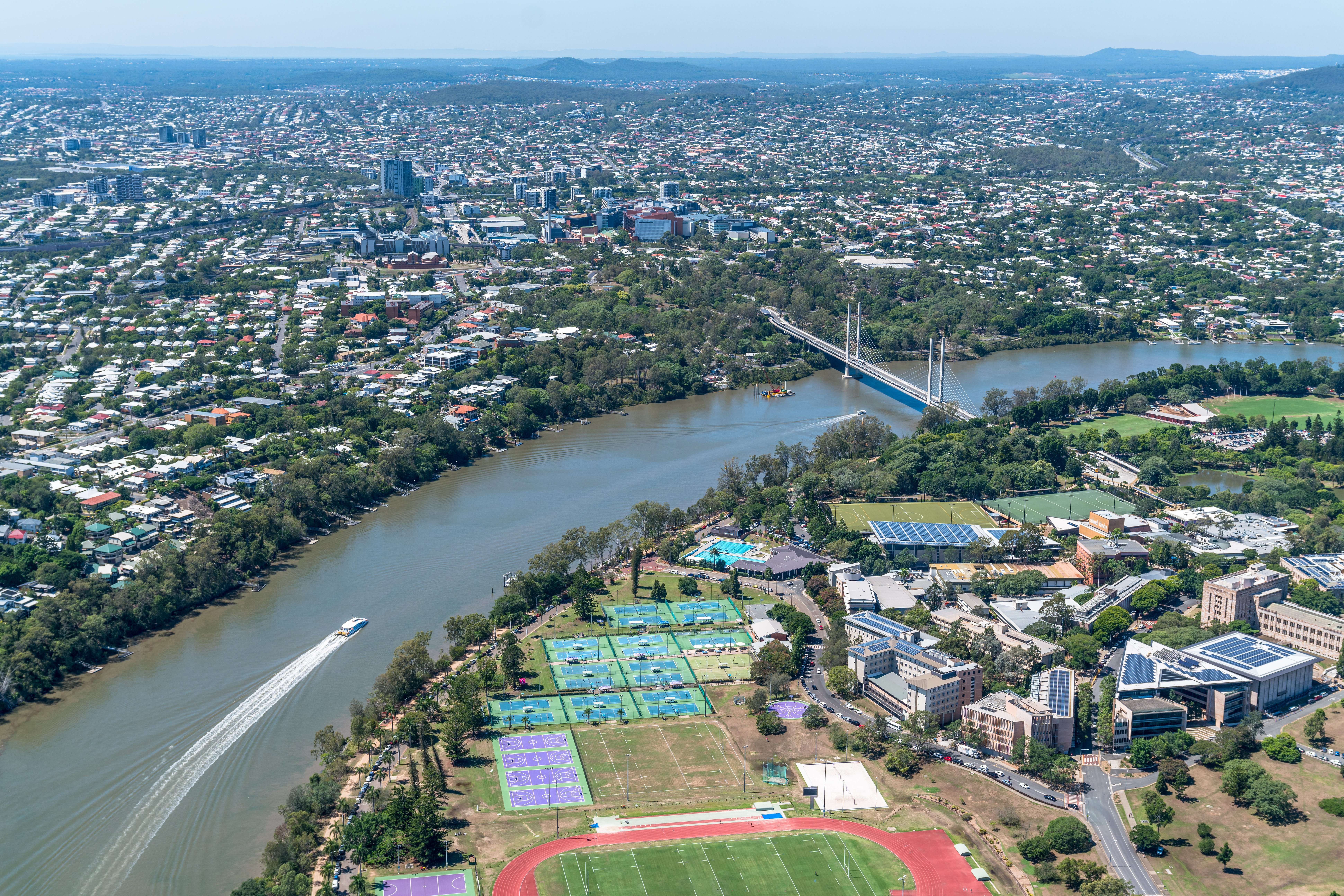
In South-East Queensland, the prestige education corridor runs through the western suburbs, anchored by Brisbane State High School in South Brisbane and Indooroopilly State High School to the west. The St Lucia and Indooroopilly catchment area, which includes Ironside State School at primary level, is seeing premiums approaching 10% above comparable out-of-zone properties. Ascot State School, with its Ascot, Hamilton, and Clayfield catchment, commands character home premiums with median prices comfortably around $2.6 million.
Recent Cotality median value data highlights the strength of Brisbane's education-driven western corridor. St Lucia, home to the highly sought-after Ironside State School catchment and a key feeder suburb to Indooroopilly State High School, recorded a median house value of approximately $2.10 million as at July 2025. Comparable Cotality-based market measures show Indooroopilly with house values around $1.86 million.
Together, these figures demonstrate how access to high-performing school catchments continues to be reflected in property values, with family buyers paying a significant premium for locations that combine educational reputation, lifestyle amenity and long-term capital growth prospects.
|
School Catchment Suburb
|
Median House Value | Median Unit Value |
|
St Lucia (Ironside State School / Indooroopilly SHS corridor) |
$2.10 million |
$900,000 |
|
Indooroopilly (Indooroopilly State High School) |
~$1.86 million | ~$865,000 |
|
Ascot (Ascot State School) |
~$2.6 million |
~$880,000 |
Sources: Cotality Market Trends (July 2026).
Adelaide: Glenunga, Marryatville and Unley
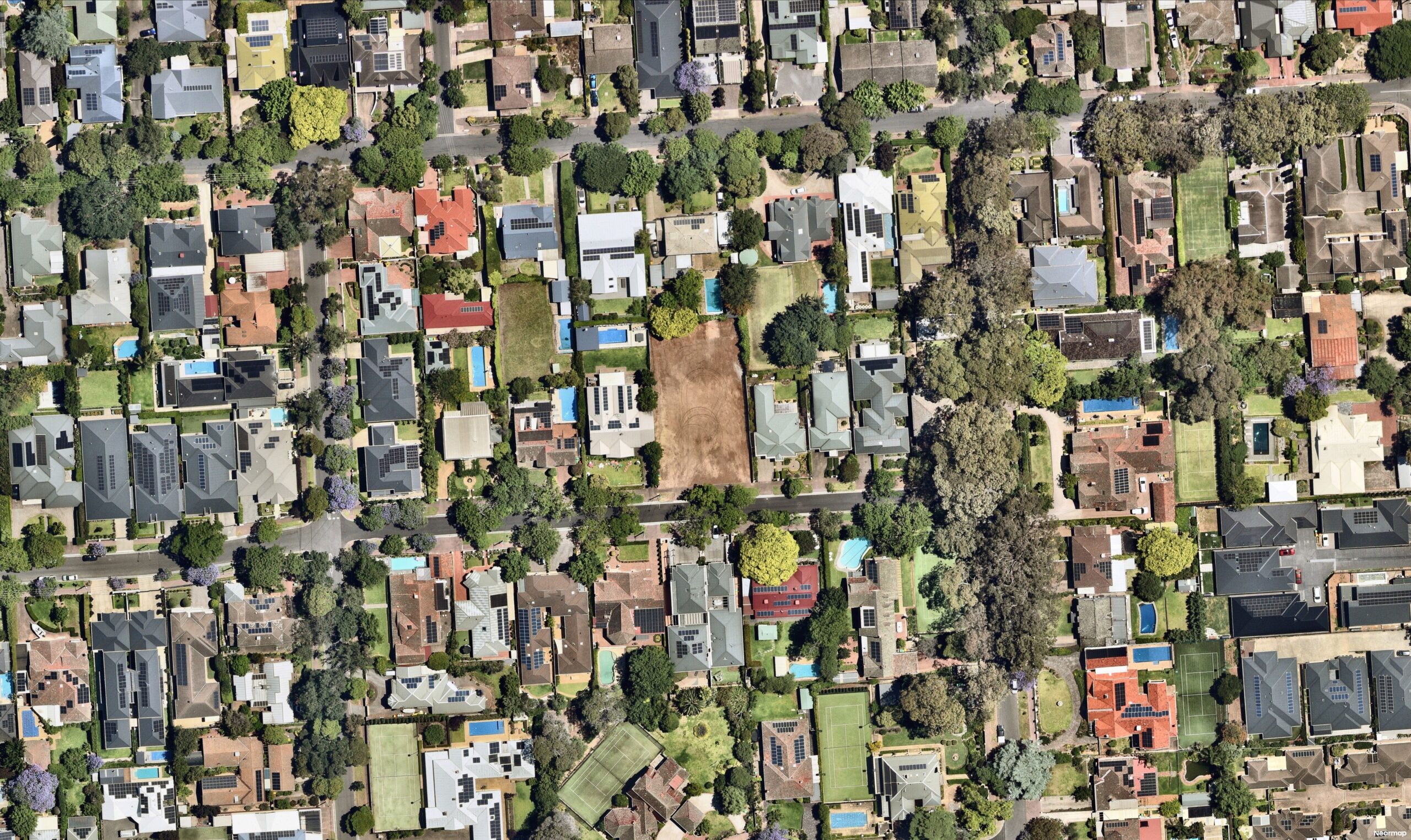 Image source: Medallion Homes
Adelaide presents one of the clearer education-premium dynamics among the smaller capitals. Properties within the Glenunga International High School and Marryatville High School zones routinely trade at premiums close to 10% above nearby comparable stock. Suburbs within the Unley High School catchment typically achieve approximately 5% more than comparable homes outside the zone.
These premiums are notable in a market where overall prestige price levels remain considerably below Sydney and Melbourne, and where the education-premium can represent a disproportionately large share of total value. For valuers, this means school zone influence requires careful and explicit treatment in comparable sales analysis.
Recent Cotality Home Value Index data further illustrates the strength of Adelaide's education-linked housing markets. As at July 2026, Glenunga recorded a median house value of approximately $2.06 million, making it one of Adelaide's most valuable school-zone suburbs and reflecting the enduring appeal of the Glenunga International High School catchment. Comparable market indicators place Unley at around $1.84 million and Marryatville at approximately $1.60 million, highlighting the premium attached to locations within the catchments of Adelaide's highest-performing government secondary schools. In a city where overall housing values remain below those of Sydney and Melbourne, these school-driven premiums can represent a particularly significant component of residential property value.
Cotality Median Value Snapshot
|
School Catchment Suburb
|
Median House Value | Median Unit Value |
|
Glenunga (Glenunga International High School |
$2.06 million |
$749,000 |
|
Marryatville (Marryatville High) |
$1.60 million | $756,000 |
|
Unley (Unley High School |
$1.84 million |
$750,000 |
Sources: Cotality Market Trends (July 2026).
Perth: The Western Corridor
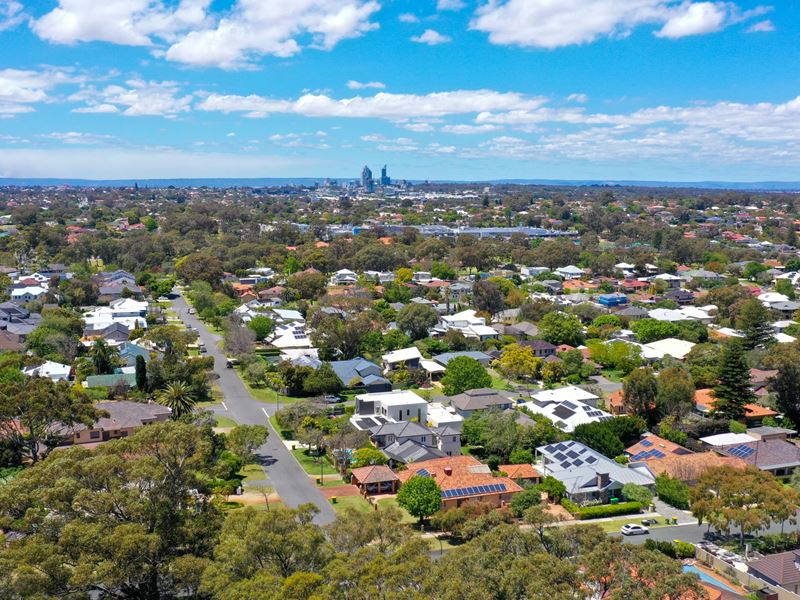 Image source: reiwa.com.au
Perth's education-premium market is anchored by a cluster of high-performing public schools in the city's inner-western and coastal belt. Shenton College in Shenton Park, Churchlands Senior High School, and the Bob Hawke College zone in Mount Claremont are the most sought-after public catchments, drawing families from across the metropolitan area.
Minimum premiums in the Shenton College and Churchlands catchments are estimated at around 10% above comparable homes outside the zone, with land in desired catchments commanding an additional $50,000 to $70,000 over equivalent nearby blocks. The market response in these precincts is visible in suburb-level data: Shenton Park, Floreat, and Churchlands all crossed the $2 million median house price threshold for the first time in the 2024-25 financial year, according to the Real Estate Institute of Western Australia (REIWA). City Beach, within the broader Shenton College and coastal school corridor, set a new benchmark with its median exceeding $3 million.
Recent Cotality suburb-level value data reinforces the strength of Perth’s education-focused western corridor. As at July 2026, Floreat recorded a median house value of approximately $2.40 million, while Churchlands reached around $2.07 million, reflecting sustained demand within the Churchlands Senior High School catchment and the broader western suburbs education precinct. Shenton Park, home to one of Perth’s most sought-after public secondary schools, recorded a median house value of approximately $2.20 million. The clustering of high-performing public schools, proximity to the CBD and coastline, and limited supply of family housing continue to support some of Perth’s highest residential values, demonstrating the significant role education catchments play in shaping buyer demand and housing market performance.
Cotality Median Value Snapshot
|
School Catchment Suburb
|
Median House Value | Median Unit Value |
|
Floreat (Churchlands SHS catchment) |
$2.40 million |
$1.36 million |
|
Shenton Park (Shenton College catchment) |
$2.20 million | $770,000 |
|
Churchlands (Churchlands Senior High School) |
$2.07 million |
$687,500 |
Sources: Cotality Market Trends (July 2026).
The Valuation Implications: What Practitioners Need to Consider
Identifying and Quantifying the Education Premium
Education-driven value uplift is real, measurable, and material. It is also nuanced. Not all school catchments create the same premium, and the premium is not static. Several factors shape its quantum and durability.
School performance is the primary driver, but performance can shift over time. A change in school leadership, academic results, or curriculum can affect community perception and, ultimately, demand. Rezoning events represent a specific and significant risk. School catchment boundaries are adjusted periodically by state education departments to manage enrolment numbers and respond to population change.
Rezoning events can place material downward pressure on values in affected areas if properties lose access to a more desirable school. Conversely, rezoning that brings a property into a high-performing catchment can generate a windfall gain.
In Victoria alone, 25 catchment zones were adjusted in 2025 to balance capacity across Melbourne, and 19 new schools are scheduled to open in 2026. In New South Wales, the conversion of 20 same-sex public high schools to co-educational models is reshaping catchment attractiveness in multiple precincts.
What This Means for Buyers, Owners, Investors, and Advisers
The education premium has different implications depending on where you sit.
For prestige owner-occupiers, the key question is whether the premium you are paying reflects genuine, durable access to a high-performing school, or a boundary position that carries meaningful rezoning risk. Properties on the fringe of a catchment, close to but not clearly within a zone, carry a specific and often underappreciated risk. Confirming your position against current official boundary data, rather than relying on agent representations or assumed historical boundaries, is a basic due diligence step that is frequently overlooked.
For property investors, the premium-versus-growth divergence identified in recent Cotality analysis is a critical consideration. In six of the nine catchment clusters studied in Sydney and Melbourne, properties inside the zone recorded lower long-term capital growth over 15 years than their out-of-catchment neighbours. The premium was already priced in at time of purchase. Investors seeking capital appreciation need to assess whether school zone positioning is an additional upside driver or simply a characteristic that has already been fully absorbed into the price.
For financial planners and property advisers, the education-cost equation is worth raising explicitly with clients who are weighing private schooling against strategic location. For a family with two children, the difference between independent and public schooling can exceed $800,000 in cumulative fees. A mortgage premium of $300,000 to $500,000 to secure a high-performing public school catchment may be the more financially rational choice, particularly when that premium diminishes in real terms over time while fee obligations do not.
For valuers, the professional obligations are clear. When assessing property in an education-premium precinct, valuers should:
-
Explicitly identify whether the subject property sits inside a sought-after catchment, and confirm this against current official boundary data rather than assumed historical boundaries
-
Source comparable sales evidence from within the same zone where possible, and apply appropriate adjustments when using out-of-zone comparables
-
Treat catchment boundary risk as a specific disclosure consideration, particularly in fringe locations
-
Recognise that the education premium may already be fully absorbed into the price level and that this does not guarantee equivalent capital growth going forward
"The school zone premium is one of the most misunderstood components of residential value,” says Carreno.
“Buyers often assume they are paying for future growth when they are actually paying for an existing amenity that the market has already priced in. Our job is to make that distinction clearly and accurately."
Recent Notable Transactions in Education-Premium Precincts
|
Address
|
Suburb | State | School Zone | Sale Price | Date |
|
1 Lindsay Street |
McKinnon |
VIC |
Balwyn High School |
$3,125,000 |
Jul 2025 |
|
27 Tuxen Street |
Balwyn North |
VIC |
Balwyn High School |
$6,480,000 |
May 2026 |
|
17 Saiala Road, |
East Killara |
NSW |
Killara High / |
$5,500,000 |
Mar 2026 |
|
24 Hamilton Corner |
Lindfield |
NSW |
Lindfield Early Learning Village |
$3,200,000 |
Feb 2026 |
|
Apartment 1201 / 160 Macquarie Street |
St Lucia |
QLD |
Ironside SS / Indooroopilly SHS |
$6.29M |
March 2026 |
|
2 Taminga Avenue |
Glenunga |
SA |
Glenunga High |
$3.85 M |
May 2026 |
All sales are indicative and sourced from publicly available listings. Values are not Opteon assessed values.
Outlook and Valuer Commentary
The structural relationship between school quality and residential prestige is unlikely to weaken. If anything, it is deepening as private education costs continue to rise, as families make increasingly deliberate location choices, and as the concentration of high-income households in established catchment precincts reinforces amenity and community investment.
Several dynamics warrant monitoring in the period ahead.
New school openings in high-growth outer suburban corridors, particularly in Victoria and Queensland, will create new catchment zones and potentially dilute demand in established areas where families previously had limited nearby alternatives.
Policy changes to school enrolment settings, such as the NSW co-educational conversion program and periodic rezoning in Victoria, can create abrupt value shifts at the boundary level.
The premium-versus-growth divergence identified is an important structural observation. Suburbs where the education premium is already fully capitalised into prices may offer limited additional upside on that specific driver, even as underlying market conditions remain supportive.
For buyers, owners, and their advisers, the practical implication is clear: location within an education-premium precinct is a value-relevant characteristic that requires specific, evidence-based assessment at the time of transaction. It should not be assumed, and it should not be treated as permanent.
References
-
Cotality (formerly CoreLogic), Six-Figure Premiums to Secure Homes in Top Public School Catchment Zones, Eliza Owen, July 2025. https://www.cotality.com/au/insights/articles/families-pay-six-figure-premiums-to-secure-homes-in-top-public-school-catchment-zones
-
Real Estate Institute of Victoria (REIV), School Zone Premium Research, 2025.
-
Futurity Investment Group, Cost of Education in New South Wales 2026, January 2026. https://www.futurityinvest.com.au/insights/futurity-blog/2026/01/13/cost-of-education-in-new-south-wales-2026
-
Real Estate Institute of Western Australia (REIWA), Perth Million Dollar Suburbs Report, 2024-25 Financial Year. https://idealrealtywa.com.au/twenty-seven-suburbs-joined-perths-million-dollar-club-in-2024-25/
-
savings.com.au, How School Catchment Areas Affect House Prices, December 2025. https://www.savings.com.au/property/how-school-catchment-areas-affect-house-prices
-
Australian Broker News, Parents Trade Private School Fees for "Smart" Postcodes, February 2026. https://www.brokernews.com.au/news/breaking-news/parents-trade-private-school-fees-for-smart-postcodes-288943.aspx
-
Domain, Family Outlays $2.7M at Auction to Get into Coveted High School Zone, December 2024. https://www.domain.com.au/news/family-outlays-2-7m-at-auction-to-get-into-coveted-high-school-zone-2-1339346/
-
Melbourne School Zone Map 2025-2026, Victorian Department of Education. https://www.findmyschool.vic.gov.au
Subscribe to Receive the Latest Property Insights!
DISCLAIMER
This article is produced by Opteon Property Group Pty Ltd. It is intended to provide general information in summary form on valuation related topics, current at the time of first publication. The contents do not constitute advice and should not be relied upon as such. Formal advice should be sought in particular matters. Opteon's valuers are qualified, experienced and certified to provide market value valuations of your property. Opteon does not provide accounting, specialist tax or financial advice.
Liability limited by a scheme approved under Professional Standards.






.jpg?width=800&name=Property%20Developer%20Blog%202%20Header%20V2%20(1).jpg)