
Joshua Fulton
Director Specialised & Advisory
How a high-performing specialty asset class is being reshaped by global volatility, market consolidation, and the rapid rise of electrified vehicles.
Market overview
Australia’s petrol station property market, a core element of the country’s infrastructure, has been subjected to volatile market conditions over the past 6 months, similar to other commercial sub-sectors.
In the past year, global markets – still affected by the war in Ukraine – experienced significant oil price shocks associated with the US-Israel conflict with Iran and the closure of the Strait of Hormuz. While the Australian market was supported by government action to broaden and protect fuel supply and a strengthening Australian dollar, global oil market volatility has increased cost-of-living pressures for Australian consumers. In turn, this has impacted local customer buying patterns, changes in travel behaviour, and rises in demand for new electric vehicles (EVs).
However, the cost of fuel has had limited impact on the value of petrol station assets. This is due, in part, to the ongoing demand for fuel, the increasingly diversified nature of petrol station businesses, and the generally strong tenant covenant and underlying land attributes that this asset class affords.
Fuel retailing remains a substantial Australian industry, with IBIS reporting an annual revenue of $62.1 billion for the sector across nearly 4,000 businesses in 2025–26. Despite the high-volume, low-margin nature of fuel retailing, the sector experienced a profit of $1.8 billion.
Key sector trends across the year
The impact of global oil prices
The US-Israel conflict with Iran led to the closure of the Strait of Hormuz, and other conflict-related impacts to oil production in the region in 2026. In turn, this caused significant market volatility in global oil supplies.
Australia was not immune to the global market shock, with fuel prices rising significantly and the government taking action to shore up reserves.
This added further pressure to household budgets and consumers made smaller, more frequent trips to petrol stations as a result. In March 2026, the Australian Bureau of Statistics found ‘volumes of fuel purchased by households fell 1.3% in the March month driven by the 32.8% increase in monthly fuel prices’.
Although the halving of the government fuel excise in April 2026 resulted in a reduction in fuel prices for consumers, its sudden implementation negatively impacted the profitability of service station businesses. The full removal of the excise relief in August 2026, coupled with ongoing volatility in the Middle East, has resulted in fuel prices now sitting broadly in line with those seen immediately before the introduction of the fuel excise relief. This is likely to place further pressure on fuel sales.
Retail channel expansion
Petrol station operators are continuing to look to diversify their income by expanding their retail offerings, which generally achieve a far higher profit margin (approximately 30 to 40%) compared to retail fuel sales (approximately 8% to 12%). This diversification also helps to counterbalance a loss of profitability through reduced fuel sales.

According to the most recent IBIS report, non-fuel products represent $5.2 billion (8.3%) of revenue for fuel retailers.
More innovative petrol station businesses are providing a wider range of retail offerings, including fresh ready-to-eat meals, onsite cafés and mini-supermarket provisions, as well as other complementary services that help create a retail destination. These multi-service retail hub models are increasing customer traffic, improving profitability, and diversifying revenue streams.
EV infrastructure
Volatile fuel pricing coupled with a wider range of EV brands entering the Australian market has resulted in a surge in EV sales, which has accounted for one in 5 new car sales for 3 consecutive months. Data provided from VFACTS and published by the Federal Chamber of Automotive Industries shows that battery electric vehicles (BEVs) in July 2026 eased slightly from the record set in June though still represented 21.7% of all new vehicle sales and has tripled from that achieved in July 2025 (7.2%).
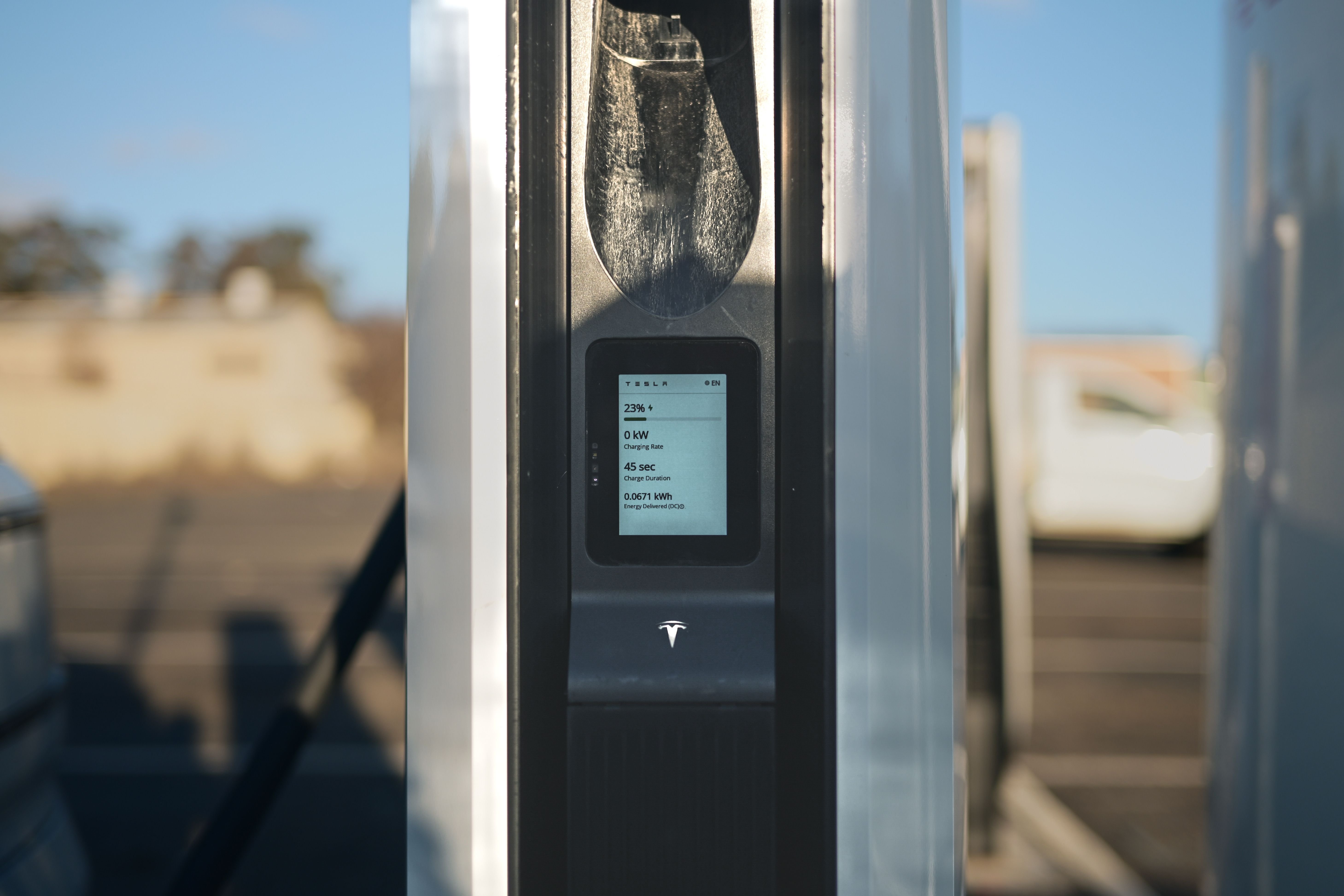
Although major operators in the sector are now investing heavily to capture revenue from EV charging stations and associated retail channel sales from EV drivers, there’s still a lag in accessible and dependable charging infrastructure that is required to support the growing EV market. The major oil companies have announced plans to improve their EV capabilities, including Ampol which has plans to expand its current network of 90+ EV charging stations and 290+ charging points to 500 EV charging points by 2027 under the AmpCharge brand. Similarly, BP has previously reported its plans to more than double its Pulse network to 600 charge points.
The rise in EV charge stations is expected to be primarily led by the major oil companies with considerable power upgrade costs impacting the financial feasibility for smaller, privately operated petrol station sites.
Technology innovations
Many of these market developments are underpinned by technology innovations.
For example, Ampol’s AmpCharge public charging network uses an app for in-app payments and charger availability information. Other apps, such as BPme, include options for payment, food pre-ordering and loyalty program benefits. Other loyalty program partnerships also influence consumer preferences, including FlyBuys and Qantas Points.
Pay-at-the-pump checkouts and unmanned self-service fuel sites have been adopted to reduce operating costs and safety risks, and increase convenience for customers. One of the more prominent brands in this space is Ampol’s U-GO brand, which currently has over 46 locations across Australia with plans to expand this by 125 additional sites through Ampol’s recent acquisition of the EG network. IOR also has a network of over 140 unmanned sites across Australia, although it is worth noting these are primarily setup for the heavy vehicle market.
Although unmanned sites lack the strong profit margins generated through convenience store sales, their profitability is underpinned by reduced operating expenses (as they have very limited labour expenses) and a high-volume, low-margin business model.
Market consolidation and competition
Although demand for new sites from the major oil companies is tempering to some degree, there continues to be a good level of demand from oil company affiliates and independent network groups. This has resulted in a consolidation of the market with economies of scale benefiting these larger network groups. A number of these groups operate under a low-margin, high-volume business model with the benefit of a major oil company supply and branding agreement.
Although the demand for new sites is primarily driven by smaller private enterprises, the 4 major operators in Australia continue to be Viva Energy Australia, Ampol, United Petroleum and BP Australia, which collectively control more than half of the market.
This market composition reflects the trend towards market consolidation that has been seen over the past few years and that continued in 2026 with Ampol’s $1.1 billion acquisition of the EG Group Australia in June. In approving that acquisition, the ACCC required Ampol to on-sell 41 of the 500 EG fuel retail outlets to sustain competition in the sector. It’s been reported that Metro Petroleum will purchase these assets.
Remaining competitive is an ongoing challenge for the smaller brands as market differentiation is being achieved through national hospitality and retail partnerships, loyalty programs and capital-intensive property upgrades, such as EV charging point infrastructure. With ongoing geopolitical tensions, limited supply can also impact the smaller operators’ access to the best wholesale options.
Asset levels
The recent IBIS report indicates a steady level of fuel retail sites across most states and territories in Australia. Only ACT (-12.5), Tasmania (-3.2%) and Victoria (-0.4%) showed negative growth of business locations year-on-year. New South Wales (1,511), Victoria (936) and Queensland (751) have the most fuel retail sites, reflecting population levels.
Newly developed petrol station facilities are primarily located in growth corridor locations or expanding regional localities. Infill development in metropolitan localities is relatively rare due to a shortage of available land, rising acquisition costs, planning constraints, and challenges associated in starting up a business within an already established market.
After a considerable increase in transactions and an improvement in market sentiment throughout 2025, a sudden shift in the economic climate coupled with a 75 basis point increase in the RBA cash rate has resulted in a far more cautious approach from investors to date in 2026. Selling agents are reporting that the level of demand for prime grade assets is still far stronger than that of secondary assets with investors placing greater weight on tenant covenant, WALE and underlying land attributes.
For added context, metropolitan-located assets with tier one tenant covenants are still generally attracting a good level of demand due to investors looking to de-risk their investment portfolios. Conversely, metropolitan-based assets with a lower tiered tenant covenant, shorter-term WALE or site-specific environmental concerns are attracting a very limited level of demand.
There is also a softening in demand projected for the wider regional market. For example, a recent resale of a Metro-branded site in Golden Point (Ballarat, Victoria) reflected a 108 basis point softening in the yield between July 2020 and May 2026. Another resale of a Metro-branded site in Portland, Victoria reflected a 68 basis point softening in the yield between February 2023 and September 2025. For added context, this property also sold in June 2020 at a yield 187 basis points firmer than that achieved in September 2025. In metropolitan Melbourne, a 7-Eleven site in Croydon sold in December 2025 at a yield 54 basis points softer than that achieved in October 2019. These resales reflect a softening market, compared to the market height seen in early 2022, and the impact of a shorter WALE.
The number of petrol station assets available for sale appears to be relatively stable at present. Yields are under renewed pressure with higher interest rates and federal government budget changes. A 'wait and see' attitude is returning among some buyers given an uncertain current short-term environment with less clarity around market direction now than was apparent at the start of 2026.
Why petrol stations are complex assets
Petrol stations are considered specialist property assets because the value of the real estate is closely linked to the performance and risk profile of the operating business.
Valuations need to consider the land and buildings, as well as fuel throughput, store revenue, auxiliary commercial channels, any lease structure, lessee brand strength, competition, traffic volumes and access, and fuel infrastructure such as tanks, pipes and pumps.
Location remains fundamental. Sites on highways, freeways, major arterial roads, prominent corners and commuter routes typically have higher values.

Environmental and remediation risks add another layer of complexity and can materially affect marketability and value. Funding for sites with a higher environmental risk profile is becoming far more difficult to secure with investors also shying away from this type of asset. However, they still offer reasonable appeal to experienced owner-operators who know how to manage these more complex sites. However, finance is still difficult to secure and usually subject to further environmental due diligence.
Market outlook
Well-located sites with a strong tenant covenant are expected to continue to generate a good level of demand from investors seeking prime grade assets. Conversely, demand for lower tiered assets or those in smaller regional localities are expected to remain subdued as the market continues to navigate a volatile economic climate. With the market adopting a ‘wait and see’ attitude, it will be important to closely monitor economic factors associated with this asset class, including changes in interest rates.
Demand for fuel is expected to remain strong. According to the Australian Government, 65.6% of registered motor vehicles were powered by petrol and 29.4% were powered by diesel at the end of January 2025. This represented a year-on-year reduction in petrol vehicles (down 1.7%) and an increase in diesel vehicles (up 0.5%). While the demand for new EVs is rising, it will take many years for the number of existing fuel-powered vehicles on Australia’s roads to decrease to a point where it significantly impacts on the viability of a petrol station business. Further underpinning the viability of this asset class is the ongoing diversification of convenience store sales, which has generally remained steadier, or increased in recent years when compared to fuel sales. Reflecting this, Viva Energy reported 1.3% year-on-year increase in non-tobacco sales for the first half of CY2026 and Ampol’s network shop sales increased by 2.8% in CY2025.
The rise in EV sales also creates new opportunities for the market, as operators adapt and provide charging facilities. Reflecting this changing consumer demand, the build-out of EV infrastructure is likely to remain a key driver in acquisitions. The market is also likely to see further change as developments in hybrid, hydrogen, electric and biofuels change how vehicles are powered.
Further market consolidation is anticipated given the prohibitive costs and regulatory requirements associated with new developments. However, regulatory action in maintaining competition is likely to flow-on opportunities for independent and smaller group operators.
 Joshua Fulton
Director Specialised & Advisory
joshua.fulton@opteonsolutions.com
0422 199 166 
References
-
IBISWorld. (2026). Fuel Retailing in Australia – Industry Report.
-
IBISWorld. (2026). Electric Vehicle Wholesaling in Australia – Industry Report
-
VFACTS (2026). Retrieved from Electrified vehicle sales hit 46 per cent in May
-
Department of Climate Change, Energy, the Environment and Water. Retrieved from Australian Petroleum Statistics 2026 | energy.gov.au
-
ABS. (2026). Retrieved from Transport costs fuel sharp rise in household spending
-
Electric Vehicle Council. (2026). Retrieved from EVs hit 36% market share as Tesla Model Y becomes Australia’s best-selling car for second consecutive month
-
Department of Infrastructure, Transport, Regional Development, Communications and the Arts. (2025). Road vehicles Australia, January 2025
DISCLAIMER
This article is produced by Opteon Property Group Pty Ltd. It is intended to provide general information in summary form on valuation related topics, current at the time of first publication. The contents do not constitute advice and should not be relied upon as such. Formal advice should be sought in particular matters. Opteon’s valuers are qualified, experienced and certified to provide market value valuations of your property. Opteon does not provide accounting, specialist tax or financial advice.
Liability limited by a scheme approved under Professional Standards.